
Burlington County Recruiting Volunteers For Crisis Counseling Program
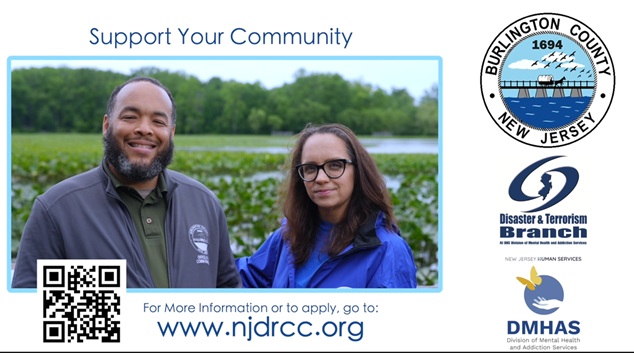
Disaster Response Crisis Counselors (DRCCs) work alongside emergency management officials and first responders to assist residents and communities impacted by a disaster or crisis situation. Counselors receive special training in disaster behavioral health, psychological first aid, and other related topics to prepare them to offer emotional support and mental health referrals to disaster-affected individuals and families.
“Disasters are traumatic and stressful; they not only cause physical injuries and damages, but they can also have a mental health toll on survivors and first responders,” said Burlington County Commissioner Randy Brolo, the liaison to the County Department of Human Services. “Disaster Response Crisis Counselors are trained to address those mental health impacts. They offer emotional support and mental health first aid that is proven to be effective. No clinical mental health experience or prior training is required, just a willingness to support your neighbors when they need help the most.”
“Communities thrive when people step up to volunteer and serve, and the Disaster Response Crisis Counselors program is one of the most rewarding forms of public service,” added Commissioner Deputy Director Allison Eckel, the liaison to the Department of Public Safety. “Disaster Response Crisis Counselors assist their own neighbors and communities at times when they are most vulnerable. Ensuring we have adequate numbers of counselors trained and ready to respond is an essential part of Burlington County’s disaster planning and preparations. “
There are currently 28 Burlington County residents who are certified to serve as DRCCs. Burlington County is hoping to recruit at least 20 additional residents to undergo the required training.
The Disaster Response Crisis Counselor Program was created by the New Jersey Division of Mental Health and Addiction Services following the 9/11 Terrorist Attacks after New Jersey officials identified a need for trained counselors and mental health support. Certified DRCCs have deployed to communities across Burlington County and New Jersey in response to a wide variety of disasters and traumatic incidents, including Hurricane Irene in 2011; Superstorm Sandy in 2012; Rancocas Creek flooding in 2019; the COVID-19 pandemic; and the Delaware River floods in 2024.
“As someone who responded and provided counseling following 9/11 and other disasters and crisis situations over the past two decades, I’ve witnessed the benefit of having trained volunteers available to offer emotional support and mental health referrals,” said Burlington County Department of Human Services Director Shirla Simpson. “The mental health impacts from disasters must not be ignored or downplayed. For volunteers looking to help their communities, this program is a way to make a real difference.”
Clinical experience is not required to become a Disaster Response Crisis Counselor, but New Jersey requires interested residents to be interviewed and undergo a criminal background check. To receive certification to serve, crisis counselors must complete 23.5 hours of training on disaster behavioral health; disaster response, incident management and command systems; cultural and ethical issues surrounding disaster response and recovery; and psychological first aid.
Training is free to residents selected for the program. To apply, visit the DRCC webpage at njdrcc.org for the program’s online application form.
Spiritual leaders of all faiths are also needed for DRCC Chaplaincy Program, which recognizes that many people affected by disasters will seek comfort from their faith and spiritual leaders. The program offers a separate DRCC Chaplain certification for those eligible faith community and spiritual leaders who complete the training.
Chaplains can apply using the same application form at njdrcc.org.